For decades, Bourgogne Aligoté was often relegated to a supporting role in the traditional kir cocktail. Some considered it too sharp, almost nervous. But today, Bourgogne Aligoté is experiencing a remarkable revival. Driven by a new generation of passionate winemakers, this historic white grape of Burgundy is finally reclaiming the place it deserves on the finest tables.
🍇 A Historic Grape with Character
Aligoté has been grown in Burgundy since the 17th century. Unlike Chardonnay, Bourgogne Aligoté is a vigorous and proud grape variety. It thrives on plateaus and higher slopes, yet it is never easy to tame.
What defines it? Its saline freshness. On the palate, it bursts with lively acidity, revealing notes of green apple, fresh lemon and sometimes white flowers. It is a wine that does not hide behind richness, but instead expresses a vibrant mineral tension and a crisp, elegant acidity.
👨🌾 A Terroir of Expression
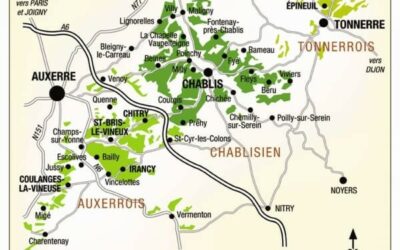
The Bourgogne Aligoté appellation covers the entire Burgundy wine region, with particularly renowned expressions in the Yonne and the Côte Chalonnaise.
Contrary to old assumptions, Aligoté is not a “secondary” wine. When crafted with care, it offers:
-
remarkable aromatic purity
-
beautiful minerality
-
surprising length on the palate
More and more winemakers are now vinifying Aligoté with precision, revealing its true potential.
🏆 Bouzeron: The Exception That Proves the Rule
While Aligoté is generally classified as a regional appellation, it has its own jewel: Bouzeron AOC. Located in the Côte Chalonnaise, it is the only Burgundy village appellation entirely dedicated to this grape.
Here, growers cultivate Aligoté Doré, a finer and more aromatic variant than the classic Aligoté Vert. Under the influence of visionary winemakers—such as Aubert de Villaine from Domaine de la Romanée-Conti, who owns vineyards here—Bouzeron has proven that this grape, planted on poor limestone soils, can produce complex wines with ageing potential and notes of hazelnut and acacia.
Expert’s note:
If Bourgogne Aligoté is the wine of friends, Bouzeron is the wine of gourmets. It’s the Aligoté that swapped its jeans for a tailored suit.
👍 Why Is Aligoté Becoming Trendy Again?
Aligoté is attracting renewed interest for three main reasons:
The search for freshness
As climate change brings warmer vintages, Aligoté’s natural acidity offers balance and remarkable drinkability.
Better vineyard practices
Lower yields and careful winemaking—sometimes with oak ageing—allow the terroir to fully express itself.
Accessibility
With the soaring prices of Burgundy’s great crus, Aligoté provides authentic pleasure at a still reasonable price.
🍽️ Food Pairings: Forget the Cassis!
While kir has its charm, Aligoté now stands proudly on its own. Its minerality makes it the perfect partner for:
-
Aperitif moments – especially with traditional Burgundy cheese gougères
-
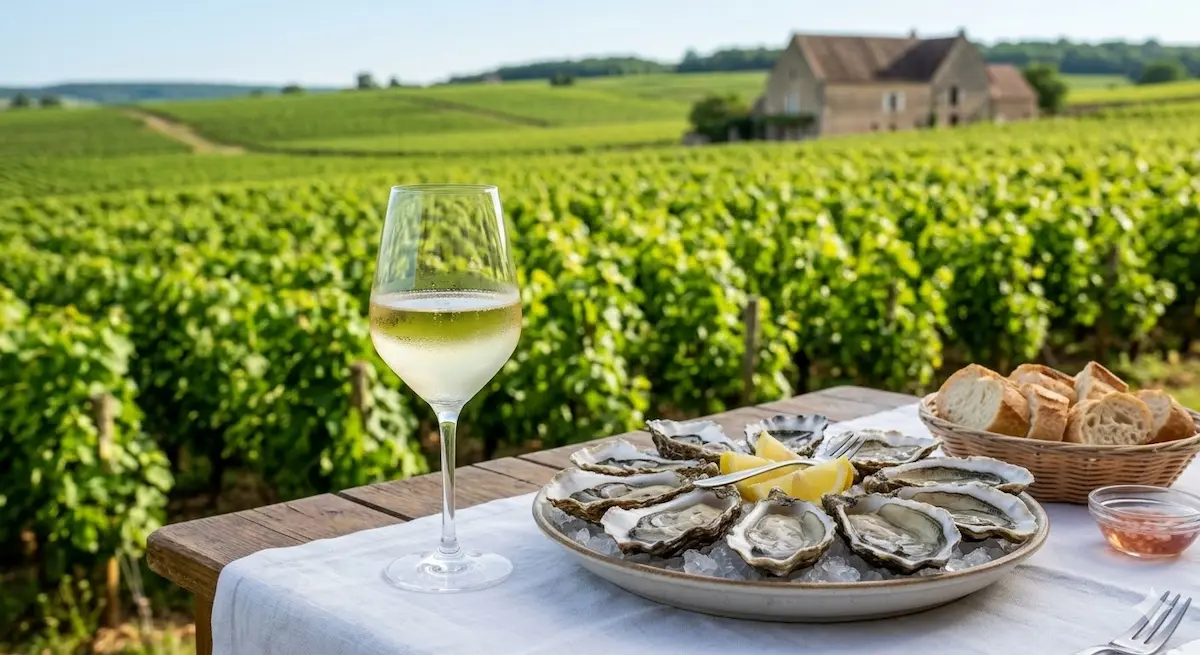
Seafood – oysters, shellfish and grilled fish love its crisp edge
-
Local cuisine – perfect with jambon persillé or Burgundy snails
-
Global flavours – try it with sushi or ceviche; the wine’s tension highlights the delicacy of raw fish
Conclusion
Bourgogne Aligoté is no longer just a “simple thirst-quenching wine”. It is a wine of terroir, gastronomy and genuine pleasure. The next time you browse a wine list, don’t overlook it—you might miss one of the most exciting expressions of modern Burgundy.
The Masters of Aligoté: 5 Estates to Follow
To discover the full range of expression of this grape, here are five outstanding producers to explore — from accessible wines to truly legendary bottles.
1. Domaine de Villaine (Bouzeron AOC)
This is the absolute benchmark. Located in Bouzeron, the estate belongs to Aubert de Villaine, co-director of the famed Domaine de la Romanée-Conti. Their Aligoté wines are precise, deep and remarkably elegant. They demonstrate that Aligoté can stand proudly alongside some of Burgundy’s finest Chardonnays.
2. Domaine Jean-Hugues and Guilhem Goisot (Saint-Bris)
Located in the Yonne, near Auxerre, this estate farms biodynamically. Their cuvée “Gueules de Loup”, or simply their Bourgogne Aligoté, is a model of mineral purity. This is Aligoté at its most vibrant and saline.
3. Domaine Ponsot (Morey-Saint-Denis)
Here we enter legendary territory. The estate produces a remarkable wine: Morey-Saint-Denis Premier Cru “Clos des Monts Luisants.” It is one of the very rare (if not the only) Premier Cru wines in Burgundy made entirely from Aligoté grown on old vines. A truly exceptional gastronomic wine.
4. Domaine Sylvain Pataille (Marsannay)
Sylvain Pataille is one of the grape’s most passionate advocates. He produces several single-vineyard cuvées, such as “La Charme aux Prêtres,” showing that Aligoté, like Pinot Noir, can express terroir with great precision. His wines are vibrant, energetic and beautifully crafted.
5. Domaine de Cassiopée (Sampigny-lès-Maranges)
This is the new generation. A young estate attracting a lot of attention. Their Aligoté wines are modern, expressive and remarkably precise. They perfectly illustrate the renewal of Burgundy on terroirs once considered secondary.
📌 Tip:
If you see the mention “Vieilles Vignes” (old vines) on an Aligoté label, go for it. Old vines naturally regulate the grape’s vigor and produce wines with far greater aromatic concentration.
✨ Experience the Burgundy Lifestyle
Would you like to discover the white and red wines of the Burgundy wine region, including the famous Chablis vineyards?
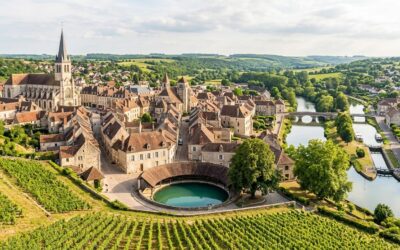
In Tonnerre, at the heart of a more discreet and authentic Burgundy, the art of living takes on its full meaning: a garden by the water, the soft evening light on old stone… and a glass of perfectly chilled Aligoté.
This part of Burgundy, located just a short drive from Chablis, offers a peaceful setting to enjoy wine tasting, local gastronomy and the gentle rhythm of the countryside.
Some places in Tonnerre allow you to truly enjoy this elegant simplicity: a leafy park by the river, charming independent houses, and time that seems to slow down.